Pages

Tuesday, November 1, 2011

For All the Saints

Halloween I do not like.

We established that yesterday.

But All Saints Day is today. And it is indeed a commemoration worth observing. In fact, if believers in Christ observed All Saints Day as much as they observed Halloween, my suspicions of Christians being more interested in fun than principle would be far less raw.

Basically, the purpose of All Saints Day draws on the victory Christ secured over death by His resurrection, and how that victory translates to our own mortality. Since everyone who is saved will, upon their death, be automatically in the presence of our Lord for eternity, what fear should we hold about dying?

"Death, where is thy victory," remember? "Grave, where is thy sting? The sting of death is sin, and sin is the law. But thanks be to God, who gives us the victory through our Lord, Jesus Christ!" (1 Corinthians 15:55-57)

Granted, "how" we actually die is still something of which I'm apprehensive. And you'd be hard-pressed to find Scripture that tells us the process of dying is something we should anticipate, or we shouldn't fight against. Doctors and medical science have been gifted by God to honor life, and the advances in prolonging life our researchers have been able to achieve come not at the hubris of mankind, but the kindness of God in the form of Common Grace.

Still, when our time comes, I think we'd all prefer drifting away to heaven while in a deep sleep, although few of us can hope to die that way. Nevertheless, the point is that no matter how we die, where we end up is not in dispute, or a dreadful place. Even if the streets weren't paved with gold, simply spending eternity in God's presence would certainly be far better than anything we could possibly experience down here.

Which brings us back to All Saints Day, where the emphasis isn't on a morbid bunch of corpses, but on the reality that life is not confined to flesh. Life continues regardless of what happens to our bones, skin, and organs. That's another reason why giddiness over Halloween is so unBiblically tainted, in my opinion. It's not the residue from human expiration that should fascinate us, but the fact that just as the grave could not hold Christ, it has no hold on us, either!

So don't let the over-Catholicised term "saints" throw you. If you've been bought by the blood of Christ, you're a saint, whether you always act like one or not. Saints exist to worship God and enjoy Him forever, which is exactly what those saints who've gone before us are doing in real time right now, in Heaven.

Paradoxically, while we look back at the example of the "Church Triumphant," as dead saints are euphemistically called, we also look ahead to our own glorification with the end of our journey through sanctification to the feet of Christ. In heavenly bodies. Forever!

I have to admit, though, that I really don't understand how this will all work out. But I'm in good company, because nobody else down here really does, either. Which doesn't matter, because God hasn't told us everything about how we'll transition from earthly bodies to heavenly bodies because we're supposed to trust Him to accomplish it.

Faith. Remember?

That's why observing All Saints Day can be so helpful, since faith is "the substance of things hoped for, and the evidence of things not seen" (Hebrews 11:1). Honoring those saints who've already won their battles against flesh and the principalities of evil here on Earth helps us put into perspective the merits of God's love for us and the sacrifice of His Son. And helps remind us of the eternal reward for us saints, and all who follow after us.

A common hymn at Presbyterian funerals is "For All the Saints," a wonderfully appropriate tribute to the life God provides each of His children in their walk towards their Heavenly home. Consider its text here, and think about the saints in your life and family who've gone on before you, and the example you're setting for your loved ones as you continue your life journey even now.

After all, if the Lord tarries, someday, the church may be singing this song, and thinking about you as they do.

For all the saints who from their labors rest,
who Thee by faith before the world confessed,
Thy name, oh Jesus, be forever blest. Alleluia!

Thou wast their Rock, their Fortress, and their Might!
Thou, Lord, their Captain in the well-fought fight.
Thou, in the darkness drear, their one true Light. Alleluia!

O may Thy soldiers faithful, true, and bold,
fight as the saints who nobly fought of old,
and win with them the victor's crown of gold. Alleluia!

The golden evening brightens in the west.
Soon, soon to faithful warriors comes their rest.
Sweet is the calm of paradise the blest. Alleluia!

But, lo! There breaks a yet more glorious day;
the saints triumphant rise in bright array;
the King of Glory passes on His way! Alleluia!

From Earth's wide bounds, from ocean's farthest coast,
through gates of pearl streams in the countless host,
singing to Father, Son, and Holy Ghost: Alleluia!


For All the Saints - text by William Walsham How, 1864
_____

Tuesday, October 25, 2011

Reading the Magnolia Leaves

Photo 1: At least 2 leaves have managed to make their way through another "host leaf."

Photo 2:  Note the puckering of the leaves as they've poked through the "host leaf."

I've never claimed to be a botanist, and I'm not about to start.

But I'm pretty confident when I say that these photos I took today of the magnolia tree in my back yard depict a pretty rare phenomenon.

At least two leaves have managed to grow their way through another leaf, which I've decided to call the "host leaf."

In case you're not familiar with the grande dame of southern evergreens, the magnolia tree, let me introduce you. They're more commonly found in wetter southern states east of Texas, but a hardy variety has managed to survive in our scorching summer heat and raw winter freezes. The healthiest specimens benefit from a full profusion of branches - no trimming! - and a deep blanket of dead magnolia leaves underneath, just like an ordinary pine tree usually does best with a thick pile of pine needles around its roots.

Unlike the conventional prickly needles of northern evergreens, however, the magnolia features broad, oval-shaped leaves with waxy green tops and a brownish fuzz underneath. And it's amongst these leaves that the phenomenon I noticed today has taken place.

As a new magnolia leaf grows, I've noticed in the past that if an abrasion occurs on its waxy surface, a dead spot can form, and even create a hole through the leaf. Apparently - and again, remember, I'm not an expert - an abrasion of some sort formed on this host leaf, which could have even been a result of the constant rubbing of the other leaves, since they are close together in a clump at the end of a branch. Over time, the constant rubbing of these leaves nestled perpendicular to each other seems to have worn an abrasion through the host leaf, which then yielded a hole, through which the other two leaves have grown!

Either that, or some bored squirrel chewed a hole in a leaf and pulled through a couple of other leaves, just to kill some time.

At any rate, I think it's an extraordinary occurrence. Don't you? No moral analogy. No sermonizing or doctrinal exposition.

Just nature doing its thing, even if it's not exactly part of God's ideal plan for leaves on His magnolia trees. Usually, they're splayed along buoyant, long branches in little tropical-looking umbrellas of verdant green, making the tree almost shine after a thunderstorm, and looking lush even in winter - a sure reminder, as all evergreens are, that spring will be here soon enough.

Perhaps even in this natural display of God's Creation, however, some rambunctious and stubborn leaves didn't want to play by the rulebook. One of them stayed in place, refusing to budge as two other leaves rubbed against it for so long that they wore a hole in it.

And proceeded to grow through it!

Hmmm... maybe there's a profound moral in here somewhere after all. At least enough to admire how God's Creation both accommodates (the host leaf) and persists (the two other ones)? And how they do it so they both survive?

I'm not even sure I'm wired to do that!
_____

Friday, October 21, 2011

Go Start With God

It all starts with God.

Everything. Not only the beginning of our world, in Creation. But the way we live our lives and view our personhood.

How you brush your teeth in the morning. Whether you brush your teeth every morning. The color of summertime grass. The density of structural concrete. How long your commute to work took this morning. And your commute home this evening. Whether you even have a job. Or not.

Remember, all of these things start with God. How they end up is, in some grand theological mystery, due in part to the decisions, mistakes, and wisdom that you and I bring to our little patches of reality.

Yet how often do we get seduced into thinking that our actions towards every event in life are more important that the One Who set it all in motion to begin with? Whose sovereignty keeps it all controlled even today, even if our definition of control isn't His?

It's about at this spot where reformed theology becomes important, because I don't believe that any of us chooses Christ. God chooses us. Otherwise, God wouldn't be sovereign, would He?

And if God isn't sovereign, He's not the center of our universe.

Not that many of us remember that He is anyway, while we go about our daily lives. How often to we try and hammer little nuggets of God and His truth into our lives only when it's convenient, or helpful, or absolutely necessary, like in times of crisis?

Instead, shouldn't our lives - every bit of them - be flowing from His truth, His laws, His provision for our salvation, His plan for our sanctification, His promise of the Holy Spirit, and His eternal Kingdom?

I'm not talking about simply trying to fit Sunday church into your schedule. Or volunteer service opportunities.

We know we're not supposed to plan stuff and then ask God to bless it. But don't we spend an awful lot of time and energy living life with our holy Savior being an afterthought, an addendum, a pesky prickler of conscience, or an ambivalent go-with-the-flow kinda fun-loving Guy?

"Oh sure, it's all good!"

The older I get, and the more I realize how ill-equipped I am to live my life despite a college education and an otherwise proper middle-class upbringing in the world's greatest nation, the more I value the perspective of self-denial (Luke 9:23) and a lifestyle of permeating worship.

Not the singing and praying and sermonizing of Sunday morning liturgies, but cultivating a God-centric action plan for the way I think and act that recognizes the His primacy and truth in all of Creation.

Not even in some big, heady intellectual exercise or browbeating no-fun asceticism. Granted, what God has purposed for our good won't always jive with what our culture says is good, and some onlookers to my life may figure I'm a pretty dull, bitter, deprived individual.

Yet to the extent that I don't focus my lifestyle on the culture around me, won't I be better able to remind myself of the things I know and am supposedly still learning about God and what His intentions and gifts are?

Something like "where my treasure is, there my heart will be also?"  (Matthew 6:21)

Don't think I'm pontificating on something I've mastered. Or that since I'm further along in this lifelong exercise than you might be, I figure I'm qualified enough to slap you upside your head for not doing as good a job at this as I'm doing.  None of us will master this before we get to Heaven, and after that, I'm not sure it will matter, since we'll physically be with God.  And who knows how much further along I am in this journey than you or anybody else - and how many other people are even much further along than both of us put together.

It's a race that we run, yes, but we're not competing against each other. We're competing against a culture that the Devil hopes will seep into our souls. Yet how often is it easier to just flow with the culture downstream, when we're supposed to be going upstream? Pegging our journey in sanctification to the culture around us doesn't give an accurate reading of our progress. We're supposed to be pegging our journey in sanctification on Christ and His perfection.

Which doesn't change, like our culture does.

Indeed, the more I read, watch, hear, and experience religious stuff at church, online, in books and magazines, and even those few times when I make a stab at sharing my faith, I become increasingly cognizant of how cluttered our thinking has become in North America's evangelical community. Cluttered, and distracted, and many times downright mis-directed. It's like we're looking back at God along this journey, when we're supposed to be looking forward to Him.

Which is another grand paradox to the Gospel, too, isn't it? Everything starts with God.

Yet He is our leader, the One to Whom we look towards.

Kinda reminds me of the old benediction, "Go with God."

Go! With God.
_____

Monday, October 17, 2011

Speaking of Confession Suppression

Call it the attack of the oral orifice.

Sometimes, I think that hole in the front of my face is my own worst enemy.

The Book of Proverbs contains repeated warnings about controlling our tongues, watching what we say, and making sure everything that comes out of our mouths is wholesome and edifying.

Our speech doesn't necessarily have to always be pretty, or flowery, or bright, or soothing, does it? But it does need to be truthful, beneficial, and loving. All three, all the time.

Sometimes "truthful" and "loving" cancel each other out, don't they, and we end up not really talking much about a particular subject, even if we think our comments might be beneficial. At least to our audience!

I'm Not Sick! (At least, not physically)

One morning several years ago, during my devotions before going off to work, the Lord struck me with how unloving and careless my talk had been recently in the office. So I decided to try and put into practice the old adage, "if you can't say anything nice, don't say anything at all." That afternoon, I overheard a couple of my co-workers commiserating about my health, wondering if I was under the weather, since I had said almost nothing that day!

Fact was, every time I'd gone to open my mouth, I'd realized that what I was about to say wasn't nice, so I'd ended up not talking much at all! When I informed my co-workers that physically, I was fine - I was just trying to watch my mouth - we all had a good laugh, realizing how much all of us contribute to the negative vibes at work when we complain more than we encourage as we talk.

But even when I do things like explaining my silence to my co-workers, I risk offending others, because our world - both at work and at church - isn't geared for gentle admonishments about sinful behavior.

Can't Reel it Back In

I was reminded of that unfortunate reality this past Friday evening at a casual dinner party with church friends. As five or six of us were chatting about people in our denomination, I blurted out a blatantly unloving opinion about somebody I hardly know, and was immediately chastised - both by a dinner companion, and my own conscience.

Why had I said that? My opinion lent nothing to the conversation, didn't encourage anybody, and maligned a fellow believer in Christ for no reason whatsoever.

I shut up - painfully aware through both the corrections of my friend and my own conscience - that I was out of line, but my silence was misinterpreted as lack of ammunition to defend my position. Which, granted, I didn't have, either. The conversation wobbled along for a couple more comments until lurching to a stop.

Yet I felt compelled to continue my silence, partly out of sheer embarrassment, but also because for some odd reason, it seemed if I apologized to the group, I would be sounding sanctimonious. Holier-than-thou. And rubbing their own noses in sin. After all, my unholy outburst merely followed a sequence of other gossip-tinged comments from other people, even though theirs were not nearly as uninformed and malicious as mine.

Which begs the question, incidentally: if what you're talking about is chock-full of facts and communicated in an unemotional tone, when does it become gossip?

Awkwardly, the conversation switched to something else entirely, and for all practical purposes, I was off the hook.

But was I? Although I felt as though I should have brought closure to my sin by apologizing for it, doing so seemed as though it would invite more consternation from my friends than genuine forgiveness. Plus, I rationalized, I didn't want to draw any more attention to what I'd said.

After all, none of us is innocent when it comes to talking our way into sin. It's just that some of us commit that sin more frequently and boldly than others, and socially, it's become relatively acceptable.

But my purpose, now as then, is not to confess any sins my friends may have committed, nor rebuke them for not doing that themselves.

Indeed, the very environment which inhibited me - however uncharitably, or conveniently - from blurting out my confession Friday night does, in fact, likely exist at other times when I'm part of the group of people observing somebody else's blatant sin behavior. No doubt there are times when I'm one of the people who inhibits the proper response from somebody who gets convicted of something they've done. Which, yes, I know it's hard for you to believe, but I'm not always a verbally rambunctious, unloving boor in public. Sometimes I'm the observer of bad behavior, not the perpetrator.

Which all combined, makes for that unhealthy social phenomenon I'll call suppression of confession and guilt.

Suppression of Confession

The suppression of confession and guilt has woven itself in the fabric of evangelical community because we often are fully aware of the sins we commit, yet we've heard so much teaching about spiritual modesty that it sounds like heresy when we actually call ourselves out on a particular sin that we ourselves commit. It's somewhere between bad interpretations of boasting in our weaknesses and trying to extract the log in our own eye while, at the same time, hoping other guilty people see the littler logs in their own eyes. And we all end up in some big confession-fest.

Which probably wouldn't be a bad idea, sometimes, particularly in communities of faith that have gotten woefully bogged-down in anti-social behaviors like false modesty, gossip, slander, judgmentalism, and - horrors! - legalism.

And perhaps this phenomenon is more acute here in the south, where social etiquette probably remains more prevalent than in, say, New York City, where people are more blunt and ambivalent towards austere aspects of group protocol.

But my question is this: at what point should we just freeze in our tracks when we realize we've said something sinful, and just let it wither and die on the flagpole of group disdain? If the conversation takes a twist and leaves us behind at the crossroads of our indiscretion, should we voluntarily dredge up the topic again when those who've heard our sin have mentally "forgiven" us already and moved on?

Or am I the only person to whom these things happen? Is it because I stick my foot in my mouth so many times, I've trained myself to try and close the proverbial barn door after the horse has bolted?

Either way, it's not so much my friends' duty to shake a confession out of me at my every verbal sin, as it is perhaps to come up alongside me in private and encourage me to rectify the situation, in whatever appropriate form that might take, based on the circumstance.

That's all well and good for me to expect that from my friends, but how much of that is a big cop-out on my part? And how often do I perform that service to them? When it's their time in the foot-in-mouth barn?

Yeah, well... maybe my lack of integrity in this area comes from my own aversion to practicing what I preach.

Perhaps this is one of those reasons why suppression of confession is so rampant in North American evangelicalism these days. Not an excuse, but a reason.

Those are times when instead of shutting my oral orifice, I should practice using it in a truthful, beneficial, and loving way.

After all, if your language is seasoned rightly, people might actually be glad when you have a big mouth.
_____

Friday, October 14, 2011

Whose Grace Is It?

I take as my text today some passages from Psalm 78:

God did miracles in the sight of Israel's fathers in the land of Egypt... But they continued to sin against him, rebelling in the desert against the Most High. They willfully put God to the test by demanding the food they craved.

They spoke against God, saying, "Can God spread a table in the desert? When he struck the rock, water gushed out, and streams flowed abundantly. But can he also give us food? Can he supply meat for his people?"

When the LORD heard them, he was very angry; his fire broke out against Jacob, and his wrath rose against Israel, for they did not believe in God or trust in his deliverance. Yet he gave a command to the skies above and opened the doors of the heavens; he rained down manna for the people to eat, he gave them the grain of heaven. He rained meat down on them like dust, flying birds like sand on the seashore.

In spite of all this, they kept on sinning; in spite of his wonders, they did not believe.

So he ended their days in futility and their years in terror. Whenever God slew them, they would seek him; they eagerly turned to him again. They remembered that God was their Rock, that God Most High was their Redeemer. But then they would flatter him with their mouths, lying to him with their tongues; their hearts were not loyal to him, they were not faithful to his covenant.

Yet he was merciful; he forgave their iniquities and did not destroy them. Time after time he restrained his anger and did not stir up his full wrath. He remembered that they were but flesh, a passing breeze that does not return.

How often they rebelled against him in the desert and grieved him in the wasteland! Again and again they put God to the test; they vexed the Holy One of Israel. They did not remember his power, the day he redeemed them from the oppressor.

Like their fathers they were disloyal and faithless, as unreliable as a faulty bow. They angered him with their high places; they aroused his jealousy with their idols. When God heard them, he was very angry; he rejected Israel completely. He abandoned the tabernacle of Shiloh, the tent he had set up among men. He sent the ark of his might into captivity, his splendor into the hands of the enemy. He gave his people over to the sword; he was very angry with his inheritance.


- from Psalm 78

We love grace, as we should, considering the Price that was paid for it.

However, the more we enjoy it, don't we tend to abuse it? Might we be doing more than simply taking it for granted? Might we be demonstrating an appreciation for the raw religious significance of grace, instead of what God wants: an imperfect love for the Provider of that grace?

No believer in Christ can lose their salvation, but how might the extent to which we never appropriate a deeper devotion to our Savior by considering the fullness of His teachings (and not just those parts we enjoy hearing) and how they apply in our service to others actually indicate we're not really His at all?

Should we dare to shrug off the impact of Psalm 78?

"But they continued to sin against Him."

"They would flatter Him, lying to Him with their tongues; their hearts were not loyal to Him."

"They were disloyal and as unreliable as a faulty bow."

"They aroused His jealousy with their idols."

If you've committed any of these sins, as I have, and believe that God has forgiven you through the atoning sacrifice of His holy Son, then rejoice in that grace! Understand the price that was paid. And live in that grace like you mean it! Not flaunting it for your own purposes, but for the benefit of His Kingdom.

Not because you need to try and repay God for anything. But because as a servant of His, you know you can't. And you know He doesn't want you to try. It's not even like it's a burden, since the love of Christ should "compel us." (2 Corinthians 5:14)

It's all a matter of perspective, isn't it? The esteemed 17th Century Presbyterian Samuel Rutherford wrote:

"Humble sinners have high thoughts of free grace. Stand not afar off, come near, be washed, for free grace is not proud when grace refuseth not sinners. Salvation must be a flower planted without hands that groweth only out of the heart of Christ.

"Take humble thoughts of yourselves - and noble and high thoughts of excellent Jesus to heaven with you!

"Angels and saints shall be Christ's debtors for eternity of ages; and so long as God is God, sinners shall be in grace's account book!"


Those who have been bought with a price live not under a yolk of oppression, but under an obligation of thanks. After all, God is jealous, and He does not want us misplacing our focus on anything else but Him.

Might the extent to which we twist that obligation inwards and lose touch with the entirety of God's holy expectations of us be the extent to which we actually devalue the sacrifice made on our behalf?

Again, to quote Rutherford, "Of all created comforts, God is the lender; you are the borrower, not the owner."

Thanks be to God.
_____

Wednesday, October 5, 2011

Don't Forget Those Who Do

A neighbor of mine had a GPS tracking device installed on her aunt's white Cadillac.

The octogenarian relative's doctor suspected she suffered from dementia, but if she was, it was still in the early stages. So the GPS was ostensibly only a precaution; plus, the aunt, although she owned a late-model car, didn't drive it much anymore anyway.

A few weeks ago, my neighbor happened to be working on her computer late in the evening when the GPS software popped up on her screen. Her aunt, an 81-year-old widow who lived about ten miles south of us, was piloting her luxury car towards our neighborhood, unannounced. At a time of day when she never drove.

As my neighbor watched on her computer, the GPS module tracked the Cadillac closer and closer to our street, then past it! The aunt kept on driving into north Arlington, where she knows nobody. Obviously, something was wrong. So my neighbor called the police, who tracked her down and kept her sidelined until my neighbor could get her.

Now, after more tests and some heart-wrenching life changes, the aunt is living with my neighbor's parents, also in their 80's. All of them, in one way or another, victims of the terrible memory-wasting disease with the ominous name: Alzheimer's.

This past Sunday afternoon, another neighbor had been out enjoying a leisurely walk around our neighborhood, when an elderly man driving his car slowly down the street stopped and asked for help with directions.

My strolling neighbor could tell right away that the driver was disoriented. So he called the police on his mobile phone. They came out and were able to ascertain a relative and phone number for the elderly driver, who lived in another city about twenty miles away. Would the gentleman like to go over to our local precinct station where his relatives can come and collect him? Yes, and some other family members came and retrieved his car. They confirmed what the officers suspected: the elderly man had Alzheimer's. And would not be allowed to drive any more.

Yet another acquaintance recently told me about a guy in his church who got a call from a Walgreen's pharmacist in Austin, Texas, several hours away from us here in Dallas-Fort Worth.

The pharmacist had an elderly gentleman at his counter needing to pick up a prescription, but when he'd pulled up the unfamiliar customer's name on Walgreen's database, he learned the man lived back here in Arlington. And had picked up his prescription hours earlier at his neighborhood store.

Shaken, the son called a good friend who lives in Austin and knows his father, asked him to go to the Walgreen's and take his father home with him, and he'd fly down immediately to get him.

Yet another bizarre introduction for another family into the miserable world of Alzheimer's.

All three of these incidents happened just this past summer. To people in one little corner of north central Texas, and, thanks to Arlington being the largest city in America without any mass transit, all via driving mishaps. And combined with my own family's travails with my aunt, they portray what appears to be a rapidly-developing new crisis in the American family: memory, dementia, Alzheimer, and/or mental health care.

It's never really happened before on this scale, with people living longer physically, but science still lagging when it comes to sustaining mental health in old age.

Consider these facts from the Alzheimer's Association:

- Alzheimer's is not a normal part of aging.

- There are nearly 15 million Alzheimer’s and dementia caregivers in the United States providing 17 billion hours of unpaid care valued at $202 billion.

- Alzheimer’s is the sixth-leading cause of death in the country and the only cause of death among the top 10 in the United States that cannot be prevented, cured or even slowed.

- Alzheimer's can strike people in their 30s, 40s and even 50s. This is called younger-onset Alzheimer's.

- 5.1 million U.S. residents older than age 65 have Alzheimer's. About 2.7 million U.S. residents older than age 85 have the disease; however, the report estimated that the number will reach about 3.5 million in 2031, when the first wave of baby boomers reaches age 85.

Indeed, if you don't know anybody who suffers from or cares for somebody suffering from Alzheimer's, it won't be long before you will. And hopefully, it won't be you.

In the meantime, the more politicians talk about entitlements and healthcare reform, even more patients will be diagnosed with one of the most devastating medical conditions known to mankind.

A condition that, once confirmed, leaves little room for waiting, for planning, or for procrastination regarding issues like wills, powers of attorney, and even insurance. Alzheimer's can eat through a life's savings rapidly, and impose incredible complications on the lives, finances, and emotions of caregivers.

Eventually, we'll all get through it, even if we're poorer financially. Right now, none of us has any other choice. At least I hold out hope that our families will be richer from the reward of being able to stand by our loved ones when there's no possibility they can return the favor.

While memories of better days become, sadly, equally one-sided.
_____

Monday, September 26, 2011

Decadence, Thy Name is Junior's

Mmmm!

Do you have a restaurant called the Cheesecake Factory where you live?

We have several in the Dallas - Fort Worth area, including one right here in Arlington. All of their restaurants feature a decor I call "California bling:" high on gaudy, and heavy on fake wood, fake palm trees, and painted glass. They're what a Beverly Hills IHOP might look like - if 90210's anorexic denizens actually ate breakfast - but with much better food.

Food which, even in a restaurant called Cheesecake Factory, doesn't relate much to cheesecake. Although, in all fairness, most of their menu items seem quite tasty, served in portions of surprisingly non-bikini-friendly sizes. And while Cheesecake Factories become a destination spot wherever they're located because of their entrees, they do have some serious diet-buster cheesecakes which defy the sleek California image.

Indeed, their cheesecakes boast an impressive listing of flavors, each with a rather fluffy texture, which I suppose fits with the chain's glitzy California bling decor. And sure, they taste good, but... they could be tastier, and their texture isn't what I grew up associating with cheesecakes. Because for the grand, solid, almost sticky original cheesecake experience, you can't beat the sumptuous delights found at Brooklyn's original Junior's Restaurant, at the gritty corner of Flatbush and DeKalb Avenues.

Yes, We Have Kosher Cheesecake

The flagship Junior's in downtown Brooklyn represents the old-school Jewish delicatessen at its urban - if not urbane - gastronomic best. With a faded bling of its own - gold chrome refrigerated cases and window frames, for example - this restaurant reeks of Brooklyn pragmatism and survivalism instead of West Coast indulgence. When Brooklyn's downtown area disintegrated into decay during the city's white flight of the past fifty years, Junior's was one of the few stalwarts, determined to make the most of whatever the city's most populous borough was becoming.

Turns out, Brooklyn was becoming a more vibrant multi-ethnic, multi-industry community, complete with revitalized arts institutions, universities, and a sprawling neighborhood of high-rise office towers housing back-office functions for major Manhattan corporations. More recently, residential skyscrapers have begun marching towards Junior's from Brooklyn's riverfront, while a controversial - and architecturally hideous - NBA arena gets built over one of North America's busiest rail stations.

Meaning that for all of the crime, blight, and worthless urban redesign programs Junior's has had to endure over the decades, maybe now it will really get to shine.

Especially good news, since the family of the restaurant's original owner still runs the place, and guards its recipes as staunchly as they've held their ground. Recipes which include the richest, most flavorful cheesecake I think you'll ever taste, each piece boasting a lightly golden top, and a crust that doesn't dare compete for the flavor. You can get it all dolled up with fruits and specialty toppings like you can at the Cheesecake Factory, but why would you want to adulterate the pure bliss of a Junior's original?


If you weren't hungry before you started today's essay, you should be by now!

It Wouldn't Be Christmas in Brooklyn Without It

I was reminded of Junior's several times this summer when some friends from Florida were visiting New York City and posted a photo of their table at Junior's - piled with food - on FaceBook. My sister-in-law e-mailed me a photo of two divine confections - slabs of cheesecake and chocolate cake - when she and my brother were visiting my aunt this summer.

Then last week, the New York Times ran a story about how consumers were managing to scrape together extra dollars for some of life's little pleasures, like cheesecake from the Junior's shop in Manhattan's remodeled Grand Central Station. Along with a photo. Not of cheesecakes, fortunately, or I would have likely drooled all over my laptop. But of some fanciful cupcakes and other pastries, as sweet-toothed customers struggled to decide on their order.

Years ago, when my father's mother was still alive, she and my aunt would host scrumptuous Christmas Day lunches at their airy apartment in Brooklyn. The pastor of their neighborhood's Finnish church and his wife and daughter would always attend, plus several of the older ladies in the church who didn't have family in the city, plus my family. And usually, although my grandmother did most of the cooking - including a delicately prepared lamb - she and my aunt would order deli trays and desserts from Junior's.

How I loved those bona-fide Christmas feasts!

One year in particular, I remember that my aunt hadn't managed to get by Junior's to pick up their order before Christmas Day. Fortunately, since Junior's is owned by Jews, they're open on Christmas (or, at least, they used to be), so that morning, my father and I drove downtown. I remember we found a parking space in front of the restaurant, loaded up the car with my grandmother's order, and started back to the apartment via Flatbush Avenue.

A few moments later, as we were pulling up to a stoplight, I noticed that somebody was running down the sidewalk, along with our car, waving wildly at us, and yelling. At first, my Dad, who grew up in Brooklyn and understood how rough it had become, warned me to ignore the guy. Probably some lunatic. But he came running right up to our car.

And we realized:  he was the clerk from Junior's!

We'd forgotten to take the most important part of our meal: the cheesecake! How could we possibly have done that? The clerk had noticed our mistake, scooped up the bakery boxes we'd left on the counter, and charged out into the cold Brooklyn morning, hoping to catch us as we drove away. He knew how bad we'd feel if we made it home without the day's ultimate dessert!

Back then, that kind of effort by the Junior's employee was called customer service. Today, in any business, it would likely be called a miracle.

Boy, I'd sure love a slice of Junior's cheesecake right about now to make sure it hasn't changed at all!
_____

Friday, September 9, 2011

Facing the Fact of 9/11

This essay has been adapted from an earlier post on March 4, 2010.

Hey - I admit it.

I'm skeptical of many things, and cynical about many others.

Not that I'm proud of the latter, or find that the former wins me friends.

But I'm neither skeptical nor cynical about whether our government perpetrated 9/11. One of the few things I can say with confidence, even as the 10-year anniversary of that event dawns this Sunday, is that there was no Washington conspiracy.

None. Nada. Zip.

Which, conversely, makes me incredibly cynical towards those folks who do still insist that American officials contrived to perpetrate those despicable events of September 11, 2001. I realize that many Americans harbor incredible animosity and vitriol against our own government. And none of us thinks Washington is scrupulously honest, or always looking out for the interests of the general public.

But planning 9/11?

Is it the sheer, stunning audacity of what happened that makes conspiracists unable to process it all? Has that much vile contempt for Washington been fomented over the years that people would rather suspect it of terrorism than Muslim extremists?

What kind of satisfaction do 9/11 conspiracy theorists expect to find in the knowledge that our own leaders masterminded the whole thing? If George W. Bush were to walk out onto the lawn of his Dallas home to a press conference and admit that, yeah, he and Clinton plotted the whole thing – would conspiracists rejoice?

Good grief – what kind of wacko, delusional fatalist does one have to be to believe our federal government is a sham? That it’s utterly despicable, full of brazen traitors and zombie killers?

Because that’s what having the US government plot 9/11 would have required.

No elite domestic terrorism cell within any covert agency or branch of the government would have been able to pull off the stunning scenario watched by people all over the world that awful Tuesday morning. No group of 10, 20, 100, or 500 people still run around the Pentagon, or live in some sort of witness protection program, sharing secret handshakes and holding alumni reunions underground in honor of their brazen plot.

For the level of cover-up required to pull off 9/11 as an inside job, trying to coordinate so many people of so many disciplines with so much equipment and such widespread access would have been sheer folly. Granted, Washington has known its share of folly, but not from a clandestine operation of that scale.

Look, we can’t safeguard normal state secrets any longer than it takes somebody to dial a phone. If anybody knew of the breathtaking plans for 9/11, wouldn't Moscow have been buzzing about it within hours? Our entire capital district is one giant sieve of confidential information.

Why the World Trade Center Wasn't an Inside Job

I don’t know much about the Pentagon, or whatever target Flight 93 was destined to destroy before passengers heroically forced it into a Pennsylvania field. But I do know something about New York’s World Trade Center (WTC). So let me help debunk at least one critical aspect about which many conspiracy advocates keep harping: the WTC's destruction being an inside job.

First, I’ve heard them say that since the WTC was a government facility, government operatives would have had easy access to plant explosives and other destructive devices.

Well, yes, it is a government facility, but the governments are the states of New York and New Jersey, not the federal government. It was – and still is – owned by the Port Authority of New York and New Jersey, and a more over-bureaucratized and union-saturated organization you’ll never find. Absolutely nothing happened in that huge, 7-building complex without at least dozens of people knowing about it.

Not only did the Port Authority control the complex, but the City of New York, the New York governor’s office, the Securities and Exchange Commission, and any number of too-big-to-fail banks all had operations in the World Trade Center. These are organizations with lots of busybodies and redundant security protocols.

In addition, veteran Manhattan developer Larry Silverstein had just won a mammoth new management contract from the Port Authority to run the WTC. It's simply beyond reason to suspect such an experienced and shrewd operator as Silverstein would bungle his due diligence by ignoring telltale signs of sabotage on the WTC structures. It's also the apex of cynicism to suggest that he would be complicit with spies and play along with their grand charade, crafting an innocent diversion like a management contract so new, the paperwork hadn't even come back from the lawyers before September 11.

In addition to Silverstein and his executives, consider the sheer volume of people from whom the prep work for 9-11 would have had to be hidden. Over 50,000 people worked in or visited the WTC every day – that’s greater than the population of many cities. It had a shopping mall, restaurants, subway stations, and a commuter rail station – just in the basement levels. Do you honestly think somebody could hack away drywall and concrete to strap plastic explosives on a steel beam without one person noticing?

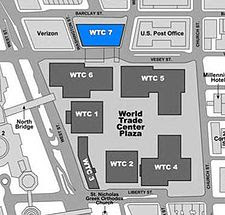
A favorite bit of “ah-ha!” evidence conspiracy theorists like to trot out is the odd collapse of 7 WTC late in the afternoon of September 11. They say that without warning, this newest addition to the Trade Center complex fell of its own accord, hours after all the other structures in the complex had already been obliterated. Look at the videos, they insist: you see puffs of smoke, indicating explosives being detonated floor by floor.

There are so many facts here that conspiracy theorists ignore, it’s hard to know where to start. Fortunately, I don’t have to go into all of them – I’ve found a fairly comprehensive and easy-to-read description of the fall of 7 WTC on Wikipedia. While I’m normally hesitant to recommend much on that site, this material has references and research notes to copious to be faked.
  • You’ll recall that nobody died in the collapse of 7 WTC. But it wasn't because some spy had a change of heart and warned tenants; firefighters noticed the building becoming unstable hours earlier, and made sure it was completely evacuated and nearby streets cleared well in advance of its falling.
  • Media images of the building taken throughout that day, plus official reports of the afternoon's recovery efforts, provide documented evidence that the building was significantly, structurally damaged from the fall of the WTC's north tower.
  • Popping sounds (not explosions) could be heard inside the building well before it fell. These noises came from structural elements buckling and dislodging as the stricken building shifted in preparation for its collapse, not demolition detonations.
  • The smoky puffs visible in photos and videos were from smoldering fires sparked when debris hit the building earlier in the day, whose smoke was released when windows popped out of their frames as the building facade crumbled.
Are You Smarter Than a Forensic Scientist?

Now, I suppose the most intransigent conspiracy theorist could insist that the news coverage was doctored, the fire department was running two sets of books when it documented events as the day unfolded, and that all of the scientists who have spent years studying the physics of this catastrophe are on the take.

But which is harder to imagine: that our government was audacious enough to orchestrate all of this and overcome so many prohibitive obstacles? Or that some ill-advised and desperately suspicious citizens are audacious enough to believe our government could do it?

Quite simply, no proof, no logic, and no motive exists to justify and explain such an outlandish accusation towards our government. For such theorists to continue hedging the possibility that legitimate questions remain over the planning, execution, and clean-up of 9-11 seems more than preposterous. It paints adherents to such suspicions with more than general silliness; it douses them with dismal acrylics of mean-spiritedness, spite, and absurdity.

We’ve moved past the time for such insipid speculation, and those who insist on perpetuating the fantasy of such unimaginable scales of state-sponsored terrorism need to cease and desist. Respecting those in authority – particularly within a democracy – remains our civic obligation unless we have proof to the contrary.

And if you believe you’ve got real proof, what makes you think a government that could pull off 9/11 is gonna let you spill the beans?
_____

Thursday, September 8, 2011

Prelude to 9/11, Part 4

With the tenth anniversary of 9-11 rapidly approaching, I'd like to return to 1993, and the first attack on New York's World Trade Center. I was living and working in New York City at the time, and doubt I'll ever forget that strange, confusing day.

This essay was originally posted in September, 2010:


The First World Trade Center Attack: Friday, February 26, 1993

Part One - click here
Part Two - click here
Part Three - click here

Part Four: Conclusion

Back at the office, I discovered how brown-outs got their name.

The elevators worked just fine, but the fluorescent ceiling lights cast a decidedly dull glow. Combined with the leaden skies outside, our office actually had an eerie yellowish-brownish tinge when I walked in.

By now, the computers were completely useless. Several of my co-workers had simply turned off their desktops and were doing invoicing with our old - yet still not obsolete - typewriters.

Since we didn't know how long our building's elevators would keep running in the brown-out, we decided to take what invoices we could complete to the post office, and then call it a day. Our boss had called again from California, and having seen coverage of the evacuation from the Twin Towers on television himself, he encouraged us to wrap things up for the day.

Three of my co-workers lived on Staten Island, just a ferry’s ride away from the pier near our office building. After hearing my story about the damsels in distress at Burger King, a fourth co-worker who lived in New Jersey - and always commuted via the PATH train underneath the World Trade Center (WTC) - decided to take the ferry too. She called her boyfriend to have him drive over from Secaucus and meet her at the terminal on Staten Island.

After everyone else had gone, I stayed behind in the office for a while just listening to the radio, which by now had gone to an all-news format with constant coverage of the emergency at the WTC. Apparently, our radio station was one of the few left on the air, since the main broadcast tower atop One World Trade had been put out of commission by the explosion. We'd discover later that several television stations would also be without their signal for days.

Staff at the law firm next door were getting ready to head home early, too, so before they left, I went into their office to look out at the Twin Towers again. This time, the garage entrance was clearly visible; any smoke coming out was of the light, wispy variety. Rescue workers were still bustling about, while as far as I could see, West Street remained choked with fire trucks and other emergency vehicles.

First responders had come from all over the city even as officials still weren’t sure what they were dealing with. Was it a disaster involving Consolidated Edison and their combustible steam pipes, as my co-workers and I imagined? Was there some sort of massive structural failure within the bowels of the WTC? Or, as some reporters were beginning to suggest, was this some sort of terrorist act?

Either way, the WTC was the most-densely populated office complex on the densely-populated island of Manhattan, so a major problem there was a major responsibility for the city's entire first responder workforce.

We saw the same thing happen on 9/11 seven years later, of course, but with unprecedentedly horrific results.

Terrorism Not Yet a Part of Life

Back in 1993, terrorism on United States soil remained almost unimaginable. It hadn’t happened before, at least on that scale.

There was the LaGuardia Airport Christmas bombing in 1975, which killed 11 people - five more than we'd learn died at the WTC - but only destroyed a baggage claim area. All these years later, that bombing has yet to be solved, although some experts suspect a Puerto Rican political group that had also bombed Lower Manhattan's Fraunces Tavern earlier in 1975, killing 4.

The bombing of Oklahoma City's Alfred P. Murrah Federal Building would come two years after the WTC's first attack, in 1995, and feature a similar modus operandi involving a rental truck stuffed with explosive material. 168 people were killed in this rare atrocity in "middle America," and over 500 injured.

Nowadays, terrorism has become a part of many ordinary patterns of life. Air travel presents the most noticeable deference to terrorism concerns, but many public buildings also now have scanning machines, closed-circuit cameras now proliferate from downtowns to suburban malls, and our presidents now ride around in a bomb-proofed Cadillac with its own oxygen supply.

Yet even back in the relatively innocent year of 1993, within hours of the Trade Center explosion, New York media began reporting that over 100 claims of responsibility had been phoned in from terrorist organizations just within the city.

Good grief! Most of us had no idea so many hate groups existed in the United States, let alone the Big Apple. Since that sounded so absurd to us, it made the idea of terrorists striking the WTC that much more unlikely.

At the time, anyway.

As I closed up the office and struck out for Uptown, mapping out in my mind the subway routes that were probably open to me, I once again crossed the pedestrian bridge spanning the gaping mouth of the Brooklyn Battery Tunnel.

Just like it had been at lunchtime, the ramps below me were eerily empty and quiet. They should have been bumper-to-bumper with rush hour traffic. I looked to my left, and gazed at the Twin Towers soaring four blocks away, a bright blue police helicopter hovering mid-way up Tower Two.

It was weird to realize that for the first time since they were built, those two towers were likely completely empty of people.

New Era Dawning

By the end of that weekend, we would learn it wasn’t Con-Ed’s fault at all. Instead, Muslim terrorists had rented a yellow Ryder truck in New Jersey, loaded it with explosives, and detonated it in the WTC’s underground parking garage.

Apparently, their plan was to topple Tower One with their bomb, and that as it fell, Tower One would destroy Tower Two. This scenario assumed, of course, that the skyscraper wouldn’t fall into the wide boulevard to its west, the old ATT building to its north, or the open plaza to its east; or, as we all witnessed on 9/11, basically collapse in on itself.

I remember our office staff laughing out loud when we heard on the radio days later that the FBI had closed the case. Apparently, a couple of the terrorists, upon learning that their plan hadn't worked, reported the Ryder truck stolen, and went back to Ryder to claim their deposit, where the FBI was waiting for them. With idiots like that trying to blow up New York landmarks, we quickly assumed that while the city might be plagued with other major disruptions like February 26’s in the future, we had little else to fear.

In fact, after the WTC was cleaned, repaired, remodeled, and reopened, I was standing in line in the lobby of Tower Two, waiting to get a photo identification badge that would give me open access to the complex, since I often ran errands for the company there. I remember chatting with a couple of other guys in line, also waiting for their badges, and we got to joking about the foiled destruction of the very building we were in.

Like typical civilians who mock government bureaucracy, we saw the I.D. procurement process as useless red tape meant to pacify building tenants who might be leery about moving back into the towers. Just another hoop to jump through; just a veneer of security to try and show that the Port Authority is serious about protecting their trophy property.

After all, nobody would be insane enough to attempt the destruction of the Twin Towers ever again!

I so wish we were right.
_____

Tuesday, September 6, 2011

Prelude to 9/11, Part 3

With the tenth anniversary of 9-11 rapidly approaching, I'd like to return to 1993, and the first attack on New York's World Trade Center. I was living and working in New York City at the time, and doubt I'll ever forget that strange, confusing day.

This essay was originally posted in September, 2010:


The First World Trade Center Attack: Friday, February 26, 1993

Part One - click here
Part Two - click here

Part Three:

I was taken aback. Talking to the damsels in distress at Burger King, it hadn’t occurred to me that a massive evacuation was taking place at the World Trade Center (WTC). I guess I had just assumed that the smoke from the fire we saw back at the office had only contaminated the lower parts of the complex, like the lobbies, the mall, and the train stations. I still didn't realize that both towers had become two giant smokestacks.(FYI, police helicopters did pluck over 100 people from the tower roofs that day, including a pregnant woman who gave birth soon after being rescued.)

Evacuation can be a great equalizer. At least from skyscrapers. When you’re emptying two 110-story buildings, executives, managers, secretaries, clerks, and custodians who were interspersed across 220 floors worth of offices and one very exclusive restaurant suddenly become one human mass facing the same predicament. There isn’t one emergency stairwell for million-dollar CEOs, and another one for hourly employees. It’s sheer physical fitness, not your job title, that spells the difference between getting out with enough energy to make it home, or just getting out.

Indeed, all ages, body types, and physical conditions were represented in the grim, sooty lines of WTC tenants shuffling out of the towers. Some were walking arm-in-arm for mutual support, some were almost being carried by others.

None were talking; many were coughing.

Some women were walking barefoot, probably having taken off their high heels back on the twentieth floor landing, or maybe the 82nd. I remember seeing photos of handicapped people who were forced to leave their wheelchairs behind, relying on the graciousness of co-workers to be carried down.

Trudging down 90, 60, 30 floors in smoky dimness, with hundreds of people in front of you, and hundreds more pressing down behind you, with more being added floor by floor as you descended. Can you imagine?! The claustrophobia alone must have been oppressive, let alone the anxiety of not really knowing what was going on. What energy that must have required for everyone involved!

Whenever tragedy has stricken the Big Apple, its mayors always like to say those are times when New Yorkers shine. And sure enough, everybody had worked together to get out of the buildings alive. Nobody was complaining, nobody was bickering. Everybody was too exhausted. They also seemed to be dazed, since nothing like this had ever happened to them before.

Lines of Soot-Covered Survivors

Oddly enough, the long lines of huddled evacuees slowly marching from the towers were being herded by police officers to walk alongside the towers themselves. The cops were not allowing anybody to roam out into the broad plaza between the WTC's two signature skyscrapers. As I walked back around to the plaza's eastern side, I could see why.

Craning my neck and looking high into the snowy sky, bits of stuff were falling from the upper floors of the Twin Towers, and it wasn’t snow. It was… furniture! Later, when I got back to the office, I heard on the radio that people waiting for congestion to clear in the emergency stairwells were smashing office furniture through windows to try and let the smoke escape and allow fresh air in. So bits of furnishings and shards of glass would occasionally rain down, onto the rooftops of shorter buildings around the towers, and into the plaza below. It wasn't like leather chairs and sofas were crashing onto the plaza like bombs during the London Blitz, but enough debris was falling to make walking out from the relative shelter of the plaza’s periphery exceedingly dangerous. That’s why the police were forcing evacuees to stay in their narrow lines alongside the buildings.

Another reason also became clear: as the evacuees came towards that parking lot that was never used, more police officers were ready in a surprisingly well-organized distribution system with bottled water, blankets, and towels, handing them out to the grateful, freezing, exhausted, soot-covered office workers, one by one. For evacuees who could barely walk, more first responders draped blankets over them and helped them onto waiting stretchers. Ambulances had lined up in rows, filling the otherwise unused parking lot and turning it into a sort of triage.

I vividly remember one tall woman with what we Texans call "big hair" that was dusted with soot. She was wearing a plush, knee-length mink coat – obviously having taken the time to retrieve her valuable fur before vacating her office – and still had on her high heels. After all, even in an emergency, some New Yorkers wouldn’t dare forgo their fashion sense. She walked towards me, patting the sleeves of her thick mink, and each time she did, soot puffed out of her coat. It was obviously ruined, and by the look on her face, she knew it. Undaunted, or perhaps simply resigned to reality, she strode past me and into the throngs of people milling about the ambulances, on into the bizarre afternoon.

Sing it With Me: "We Need Dirty Laundry"

By this time, news crews were everywhere, and as evacuees from the towers came towards the parking lot triage area, some reporters would dart towards them, trying to get an interview. Some were shooed away by cops who were trying to assess the medical needs of evacuees. But not many evacuees had the interest – or the breath – to talk with the reporters anyway. They just pushed by the media folks, wanting only to go home.

Other evacuees lined themselves up at the backs of ambulances staged in the parking lot. Paramedics worked feverishly with oxygen tanks and masks, helping people wash their faces, rinse out their sooty mouths, and cleaning up after a few evacuees simply vomited what they’d inhaled back in the towers. Even as the medics were multi-tasking on multiple patients, the lines at the back doors to their ambulances continued to grow. But the evacuees were patient, for the most part; content enough to be safely out of the towers.

Patience, however, was lost on the news crews who were roving around the triage area, like vultures looking for prey. Who could get the best story? Who could find the evacuee with the most harrowing tale to tell? What better place to look for provocative exclusives than these ambulances, where weary survivors were being treated?

The only time I became disgusted at what I saw came when I watched TV news crews try to push their way into the backs of ambulances where paramedics were treating injured people on stretchers. Reporters actually pushed aside waiting patients and tried to clamor inside the ambulances, swinging light poles and microphone poles with absolutely no regard to the people or equipment that were being jabbed inside. This happened repeatedly, from ambulance to ambulance, as all of New York’s media hounds tried to scoop each other with interviews of the sick.

At first, it was disturbing, but as I witnessed it happening multiple times, it became appalling. I couldn’t believe that here we were, in the face of what was rapidly being realized as a major emergency, and sick people were being pushed aside and jostled so news reporters could try and advance their own careers. This had nothing to do with getting first-hand accounts of what went on inside the Twin Towers. Those reports could be collected after everybody was safely home and over the day’s shock. The only reason for those reporters to be as belligerent as they were in their aggressive pursuit of interviews and video of sick people in ambulances was their own lust for making a headline. I’ve never held the media in very high regard, but after that day, news reporters have ranked just above used car salesmen in my book.

Suddenly, a cop saw a particularly insensitive reporter trying to shove his way into the back of an ambulance, pushing back a cluster of evacuees waiting for help. “Hey!” she yelled, a hefty black officer, as I recall, reaching over and physically pulling the reporter by his arm out of the ambulance, his hand-held microphone dropping to the pavement. The evacuees who had been pushed aside gave the reporter looks that matched the sooty marks on their faces, otherwise too weary to express their own anger at the reporter. When the reporter started to protest, the officer simply ordered him to stay back and not get in anybody’s way.

By now, the snow had mostly stopped, and the smoke drifting from the tops of the Twin Towers was clearly visible. After soaking in a bit more of the human drama unfolding before me, and finally seeing one too many reporter push aside evacuees waiting for help at the ambulances, I decided to return to the office, having more than enough material of my own to share with my co-workers who had stayed behind.

I headed back past the Burger King, walking down Trinity Place, to the relative sanity of our busy little firm.
____

For Part 4, click here.